
David Sterling Brown, IRT ’08, Associate Professor of English at Trinity College in Connecticut

In 2009, thanks to IRT—and the exceptional guidance I received from my IRT advisor Leislie Godo-Solo—I was accepted into NYU’s English PhD program off the waitlist. Despite applying to about ten grad programs, NYU was the only one that accepted me and my low GRE score, which recalled the low 940 combined SAT score I had when my undergrad alma mater Trinity College (Connecticut) accepted me in 2001. And so, I quit my job as Teach For America’s Connecticut Recruitment Director and began commuting from Connecticut, my home state, to NYU for several years as I took grad classes and taught, and eventually finished drafting my dissertation during my 2013-14 Trinity College Ann Plato Predoctoral Fellowship. With my dissertation fully drafted by Spring 2014, I went on the academic job market that Fall and landed a job as Assistant Professor of English, of Shakespeare and critical race studies, at the University of Arizona.
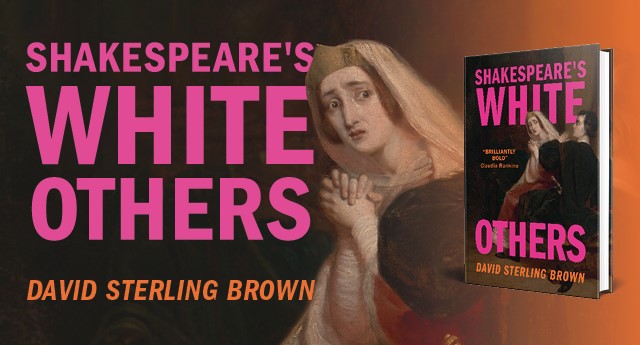
I preface this piece with that background information because: I want you, reader, to know challenges are inevitable…and so are the rewards when you stay the course; I want you to know that being relentless about achieving your goals does, indeed, pay off; and I want you to know the origins of my academic career path so you have some awareness of what it took for me to become in 2023 a tenured Trinity College Associate Professor of English, one who recently published a Cambridge University Press book, Shakespeare’s White Others. You might be wondering how I earned tenure at Trinity when I just noted my career began at the University of Arizona. Well, in 2018, Binghamton University, SUNY, recruited me from Arizona and, for several reasons, including the fact that I was in an eight-years-long relationship that became long-distance for three years because there were no adequate professional opportunities in Tucson for my then partner who would have had to take a 66% pay cut if he moved with me.
Thus, in my first three years on the tenure-track, I made two cross-country moves as I managed my career and my personal life, making sacrifices of all kinds along the way, including financial ones that took time to recover from. With Binghamton, NY being another town lacking suitable professional opportunities for my partner, I ended up commuting 400 miles roundtrip from upstate NY to CT each week, maintaining an apartment in Binghamton, which meant my financial resources were being strained to keep both my personal and professional lives going. And then came the COVID-19 pandemic and recruitment efforts from Trinity College. Eventually, in 2022, I made another institutional move and negotiated with Trinity to begin my tenure process that same academic year. There is a lot one can negotiate in academia, especially when it is not a first job and one has an established research and teaching profile.
I didn’t know much about negotiating when I made the Binghamton transition but I learned, and continue to learn, thanks to my mentors. In my conversations with Trinity during the recruitment process, I discovered the monograph would be the key to earning tenure. Despite having published sixteen peer-reviewed articles and essays between 2016-2022; despite having coedited a special issue for a leading journal in my field and being senior editor of a journal issue for another leading journal in my field; despite having published numerous public-facing essays and having delivered nearly 50 invited talks, in addition to other accomplishments such as a prestigious 2021-23 ACLS/Mellon Scholars and Society Fellowship that facilitated my residency with Claudia Rankine’s The Racial Imaginary Institute, I needed the book. Full Stop interview by Claudia Rankine, January 23, 2024.
Shakespeare’s White Others, my first book that was released in November 2023, is not a dissertation revision. I wrote my dissertation, “Placing Parents on the Early Modern Stage,” as a means to an end. My workaday world experience with Teach For America shaped my desire to have a steady paycheck and save for retirement, for instance. I wanted to return to that lifestyle, which meant being relentless about creating self-imposed research and writing deadlines and completing grad school within the time frame I set for myself, six years maximum. For me, the dissertation was simply a key to unlock the graduate school exit door. That mindset worked in the short-term but presented challenges later because my dissertation was not written with the intention of it becoming a book and therefore it did not contain a significant enough critical intervention like Shakespeare’s White Others.
As a first-generation PhD student and the first person in my family to earn a doctorate, I didn’t know …
David Sterling Brown, PhD
As a first-generation PhD student and the first person in my family to earn a doctorate, I did not know anything about having and, more importantly, keeping a professorship. I didn’t know about the expectation to revise one’s dissertation into a book (and preferably a “good book” since it can determine a lot about one’s career trajectory). I did not know that before I could have job security I would have to undergo a probationary period of six to eight years called the tenure process. I didn’t know I’d have to fly across, and out of, the country to the Modern Language Association Conference in Vancouver, Canada to do in-person interviews. And I didn’t know there would only be approximately 40 tenure-track jobs available in my field or that I’d have to rule some of them out because they were either in locations I did not deem safe for me as a Black man or because they were homophobic religious schools. I needed a job at a place that would welcome all of me.
Beyond all of that, I didn’t know I would have to regularly attend academic conferences around the country, around the world, to build professional relationships and keep up with developments in my field, broadly speaking. Moreover, I didn’t know that, in addition to teaching, I would have to provide labor in the form of “service” on top of maintaining an active research program, all while developing and nurturing professional relationships at my institutional home and in the profession. In short, I didn’t know academic jobs have a lot of moving parts and that, ultimately, one must figure out how to create synergy among those moving parts to ensure one is efficient, to ensure the job is not the sole defining feature of one’s life.
Given my naivety about the profession, I also did not understand that one must move up the ranks to have the most impact professionally, and that much of that mobility can depend on one’s publication record, not just how much one has published but also where one has published, hence my desire to secure a book contract with a top press in my field such as Cambridge. Furthermore, I did not know what distinguished one professor’s rank from another (i.e., adjunct, visiting, assistant, associate, full, chaired, distinguished). That knowledge acquisition was important for my planning purposes. I was advised early on by senior mentors that one must plan certain aspects of one’s career at least five years out. Thus, I developed a habit of outlining multiple goals for myself and then executing my vision. I am grateful to Dr. Kerry L. Haynie and Duke University’s Summer Institute on Tenure and Professional Advancement (SITPA), and my brilliant SITPA mentor Dr. Melissa Shields Jenkins, for the career-defining guidance I received as a junior scholar.
Before Shakespeare’s White Others became my book project focus, I drafted a project titled Black Domestic Matters that I intended to be my first book, one that also was not a revision of my dissertation. However, with the help of a few mentors, I realized I hadn’t pushed my thinking far enough with that project given the critical impact I hoped to have. Therefore, in 2019, after presenting on my first plenary panel at the Shakespeare Association of America (SAA) Conference, I set out to other whiteness, drafting a completely new manuscript between 2019-2021. Being a plenary speaker was a career-changing opportunity, one that led to other invited speaker engagements, including keynotes. At SAA, my ideas were very well received; as such, I took the positive reception as a sign to deepen my work on racial whiteness.
The SAA conference afforded me the opportunity to meet with editors from Oxford University Press and Cambridge University Press to gauge their interest in my work. I originally set up those meetings in advance of the conference to discuss Black Domestic Matters. Ultimately, given my intellectual shift, I did not send a manuscript draft to the Oxford and Cambridge editors until late 2020 and early 2021, respectively, for it is crucial one’s work is as polished as possible when approaching presses. Despite the time lapse, both editors were still interested in my new work because I explained how my project evolved into something that would likely have a bigger impact. I sent my book manuscript to Oxford first and within two months I heard back from the interim editor (the editor I met at SAA was on a leave) and I received conflicting reader reports, with the first reader recommending significant revisions that differed greatly from my vision for my book. The second reader suggested minor revisions and enthusiastically recommended publication.
After consulting my mentors, I put the Oxford opportunity on hold (leaving things open-ended with the editor) to explore the Cambridge possibility, which worked out beautifully—three positive reader reports received. With Cambridge, Shakespeare’s White Others was awarded the Press’s Academic Impact designation, which meant my book would receive special marketing attention and a unique cover design; be priced much lower than traditional academic books ($39.99, with a 20% discount if ordered directly from the press using code: SWO20); and be revised for a broad audience that includes academics and non-academic readers. My book’s breadth and depth allowed it to garner interest outside of my field and receive cross-disciplinary endorsements from Dr. Patricia Akhimie (Folger Institute, Folger Shakespeare Library), Dr. Bernadette Andrea (UC Santa Barbara), Keith Hamilton Cobb (actor, playwright, director), Simon Godwin (Artistic Director, Shakespeare Theatre Company), Claudia Rankine, Dr. Melissa E. Sanchez (UPenn), Dr. Emma Smith (Oxford University) and Dr. Tukufu Zuberi (UPenn).
Fast forward to 2024 and I am now starting a book tour, a tour made possible partly because of how I wrote Shakespeare’s White Others under my editor Emily Hockley’s fantastic guidance. As a new book author, I have been entrepreneurial about promoting my book, doing things such as striking up impromptu conversations with people on the street and even in airports; accepting practically every speaking and writing opportunity offered to me (including this one!); corresponding with scholars and relevant constituents outside of my field whose work I cite; and maintaining a professional website that serves as a free Shakespeare and race resource, for example. Additionally, I created a visual complement to my book, a virtual-reality art gallery and exhibition titled “Visualizing Race Virtually”: a free resource that is accessible worldwide and designed to help people see the main theories from my book—the “intraracial color-line” and “white other”—at work in visual art and in our modern world.
Moreover, I signed a deal with Tantor Media for a soon-to-be-released audiobook version of Shakespeare’s White Others, narrated by me. Presently, I am at work on my second book—Hood Pedagogy—that will be published by Cambridge. Lastly, to bring things to a full-circle conclusion here, I must note that one of the final stops on my Spring book tour is an invited talk at NYU, where I earned my M.A. and Ph.D. To be a tenured Associate Professor at my undergraduate alma mater and simultaneously be an invited speaker at my graduate school alma mater is nothing short of a serendipitous dream come true. For helping me launch my scholarly career, I am incredibly grateful and indebted to IRT and all who support its mission.
 Institute for Recruitment of Teachers