
by Crystal Alexandra Simmons, IRT ’24

When you ask someone “where have you been?” it can bring about a myriad of answers. Depending on the context, we often feel the pressure of naming and listing all the places and spaces. But what’s the point in sharing our travels if we don’t slow down and digest all the lessons from the experiences. Throughout my life, I have traveled to many places in the United States (and still some to go) along with four other countries (technically 5 but the Vatican was kind of a (twofer”). From an early age, my curiosity about the world and the life that inhabits it fascinated me. What do people do for work? What do they eat everyday? Do they like pancakes like me? Do they go see their grandmother monthly like I did? Do they have the same flowers as here? So many more questions had swirled in my head as a young child about ways of life that were happening miles away from my hometown of Waldorf, Maryland. My mother would often call me her “show me” child. As a child, I was constantly watching and learning from my environment. One of those early signs that my instinct to see and connect with the world was far more eminent than I realized. At one point in my adolescence, I thought I was going to go to Johns Hopkins and major in International relations (an elevator pitch I had developed after my first year in high school). But what was always fascinating to me about traveling was the stories of the people. My grandparents always had stories of the food they ate, situations they ran into, and how they met the people along the way. It was where I learned that no matter where you go, connecting with the land is about the people, and the people make the experience.

As a researcher (a new word I’m working on claiming), I am always interested in the theories of the social. When I travel, I am constantly thinking about food, plants, and history. This curiosity often leads me to new experiences that no travel advisor or TikTok can sell you. I have been told that I have a lot of patience and hold space for many things. This might be why traveling to different places brings me such ease. It also brings up a lot of anxiety for a neurodivergent person who’s questions often bring about multiple correct answers. But such is life when you’re a sociologist. This type of curiosity also beckons the question of support. How do you like to help and receive help? This is something every traveler in the west should be thinking about when visiting places where we are sometimes positioned above the local population. Especially in the Caribbean. With multiple entangled histories from the western colonizers, the Caribbean is home to diverse plants, people, foods, and stories. The trans-Atlantic starve trade along with migrations from southern parts of Asia, have shaped the culture and the food ways of countries like Cuba and Costa Rica. And while any travel can be seen as research for someone like me, a constant question asker who is dedicated to the the journey of the “why,” it’s not lost on me how that the unique beauty of the Caribbean is heavily informed by the spirit of theories about life from around the world. And these theories often lead me into the heart of people’s gifts and offerings that they bring to the world everyday.

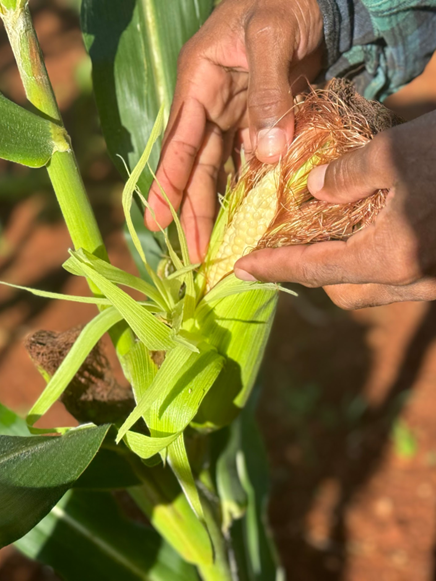
The first time I flew into Jose Martí International Airport in Habana, Cuba, I was greeted by different landscapes of circles of greenery, brownish red clay, and the deeply blue water that connects the southern U.S. I was deeply anxious, over stimulated, and hyper aware. I had this feeling that I had transported through a new portal, connecting time and space in a new dimension. While driven with excitement and a sense of slight relief, I was also just ready to see what was in store. After what felt like an eternity and a brief encounter with a plain clothed man questioning me about why I’d come to Habana, I eventually got my bags and found my way to my host (who’d I soon come to know as a friend). The breeze was quick and just like the ride to mi casa. My mind was still trying to take in all the contradictions and adjust to the fact that I had finally made it to a country that I thought that I might not ever be able to experience in this lifetime. In school, the only things we were taught about Cuba was that it was a pivotal stop in the transatlantic slave trade. Known for its sugar export. The next time we would hear of this island was the Cold War tensions and the Bay of Pigs. Outside of school, my only reference points were “popular” culture, my abuela’s disdain for her country’s politics and situation, and a former college friend who had immigrated to Upstate New York when she was 12. I always loved Cuban food. It was familiar in ways that I couldn’t exactly name. It’s interwoven legacy of food and music reminded me of the South in ways I couldn’t name until now. It wasn’t until I was able to sit and experience the stories of Afro-Cubans had I begun to understand how this question mark in my mind about Cuba started to dissipate and become a canvas for familiar experiences.
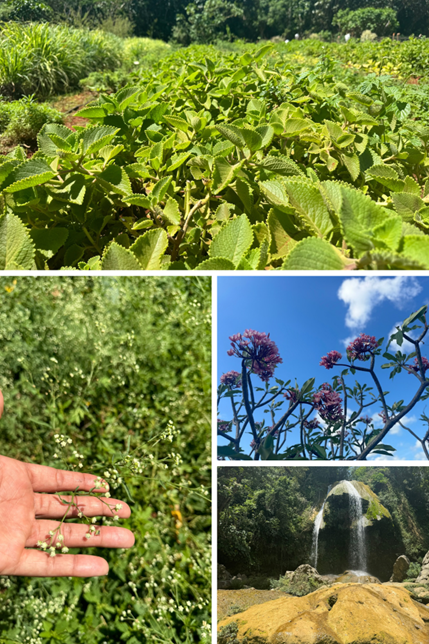
From the familiar faces in Alamar to the remote whispers of Guanabo, I learned a lot about how Afro-Cubans have been growing and sustaining communities through cultivating food. You can also feel the history of resilience through walking the streets of Regla, a town illuminated in blue honoring the goddess of the sea Yemoja. I always learn so much about the connection of Afro-descendants via the waterways while in Regla, whose port story sounds similar to those from the D.C., Maryland, Virginia area. Similar to the south Caribbean of Costa Rica, the African Diaspora cultivates rich stories of resistance in subversive and non subversive ways. Matanzas, a port city and province known for its constant Black Women led rebellions has taught me so much about the healing of people through food and plants. In meeting with the Osain (the person who holds the medicinal wisdom of plants) time and time again, I learned that the properties we see in our bodily functions can also be seen in Plants. His walls of his abundant and cozy space filled with bark, herbs, and recipes for healing various illnesses, are a comforting reminder that learning begins at home. Each time I visit Matanzas, I am reminded of the resistance of African descendants and the knowledge within us that preserve our memories. People are very caught off guard when I mention the large population of Afro-Descendants. For so long, the African diaspora in the United States has received limited information and experiences from those on the island. Oftentimes, people in America only get to see the white Cuban experience via Miami. These are often who you will see on the plane traveling back and forth as well. It was something I immediately noticed and felt a familiar irritation as I boarded and deplaned to and from the island. A searing reminder of whose stories make it out.
Each time I visit the island, I find myself even more fascinated by daily life. The slowness of Caribbean living while also experiencing contradicting realities. How people work, play, commune, eat, and travel are enough to make anyone ask me: why do you return? But my answer is always “the people.” For a young Black gender expansive femme like myself, I am no stranger to the perils of traveling while Black, whether here or abroad. But my first trip to Habana set the tone for how I return each time. By my second time, My Spanish had gotten stronger, my questions had grown deeper, and my connection to the land was much stronger. In April of 2024, I experienced the mountains of Soroa for the first time. It was a peace that I didn’t know could ever exist. Slightly cooler than the city, the air was fresh. Crisp. The altitude shift was subtle but grounding. We were welcomed with fruit and a tour of the land. While hiking through the diverse pathways of the hillside and wooded area to get to the main road, all I could do was stop and smell the flowers along the way. While horseback riding to the park entrance for the waterfall, I found new questions in my mind about the plants and the people that lived there. Soroa, now named Pinar del Rio, was formerly made up of coffee plantations. Many of the afro-descendants from that area are direct descendants of the enslaved ancestors that worked that plantation. They also share the common surname “Soroa.” Listening to the story of a Black Femme farmer at the top of the hill where we enjoyed a beautiful lunch, I wondered about those who came before us. Were they able to stop and see the beauty we were seeing? Did they even have a chance to dream about life beyond the mountains?
Crystal Alexandra Simmons, IRT ’24 is pursuing a Ph.D. in African Studies at Howard University beginning this fall.
 Institute for Recruitment of Teachers
nice post thxu for good info
phd admission
LikeLike